

Photographic Secrets from the Arab-Israeli Battlefield in 1948.
For the approximately 700 Jews captured by the Transjordan Arab Legion in 1948, life was marked by uncertainty. They came principally from Gush Etzion, where hundreds of their comrades had been killed, and from Jerusalem’s Jewish Quarter. Smaller groups came from Gezer, Naharayim, and other communities. Some were soldiers; many were civilians. The prisoners included children, teenagers, elderly men, and a substantial group of women.
None of them knew what awaited them. The Jordanian Legionnaires who took them into custody were generally disciplined and, in several instances, protected them from local Arab mobs threatening to kill the captives.
The prisoners had heard testimonies emerging from the Nazi camps in Europe only a few years earlier. After passing through hostile crowds in Jerusalem and Hebron, they had reason to fear for their lives. Their eventual destination was Umm el Jamal, a tent camp near Mafrak, in the Transjordanian desert, along the main road to Baghdad. An Iraqi military base stood nearby, and its soldiers were openly hostile toward the Jewish prisoners.
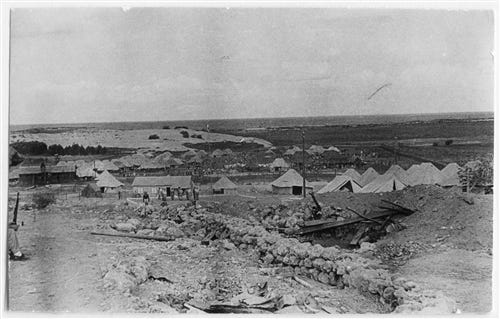
“Camp de prisonniers de guerre juifs. Vue générale.” General view of the Jews’ POW camp. (International Committee of the Red Cross, ICRC)
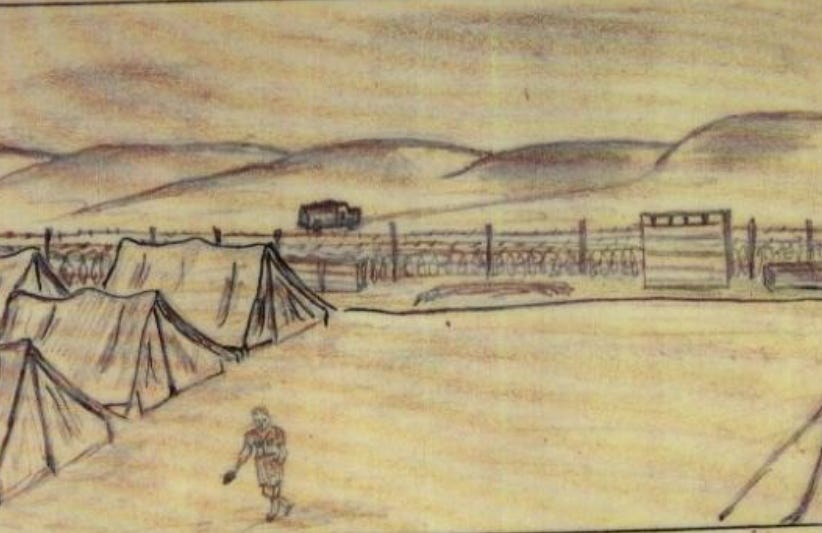
Drawing of the Umm al-Jamal camp by a POW, Avraham Yedid. (Kfar Etzyon Memorial and Heritage Site)
Leadership
The Jordanians granted the prisoners considerable autonomy in running the camp. Making that arrangement work was no simple matter. The prisoners formed a diverse community of secular kibbutz members, Haredi Jews, Ashkenazim, Sephardim and Mizrahim, soldiers, civilians, and rabbis.
The chief representative of the prisoners was Yosef Blustein, chairman of the workers’ committee at the Naharayim power station. He had been captured by the Jordanians along with some 30 other workers. As the camp’s “mukhtar” and with his fluent Arabic, Blustein communicated with the Jordanian camp commandant. He also oversaw internal discipline and daily routines, supervised sanitation, food distribution, education, religious arrangements, and cultural activities.
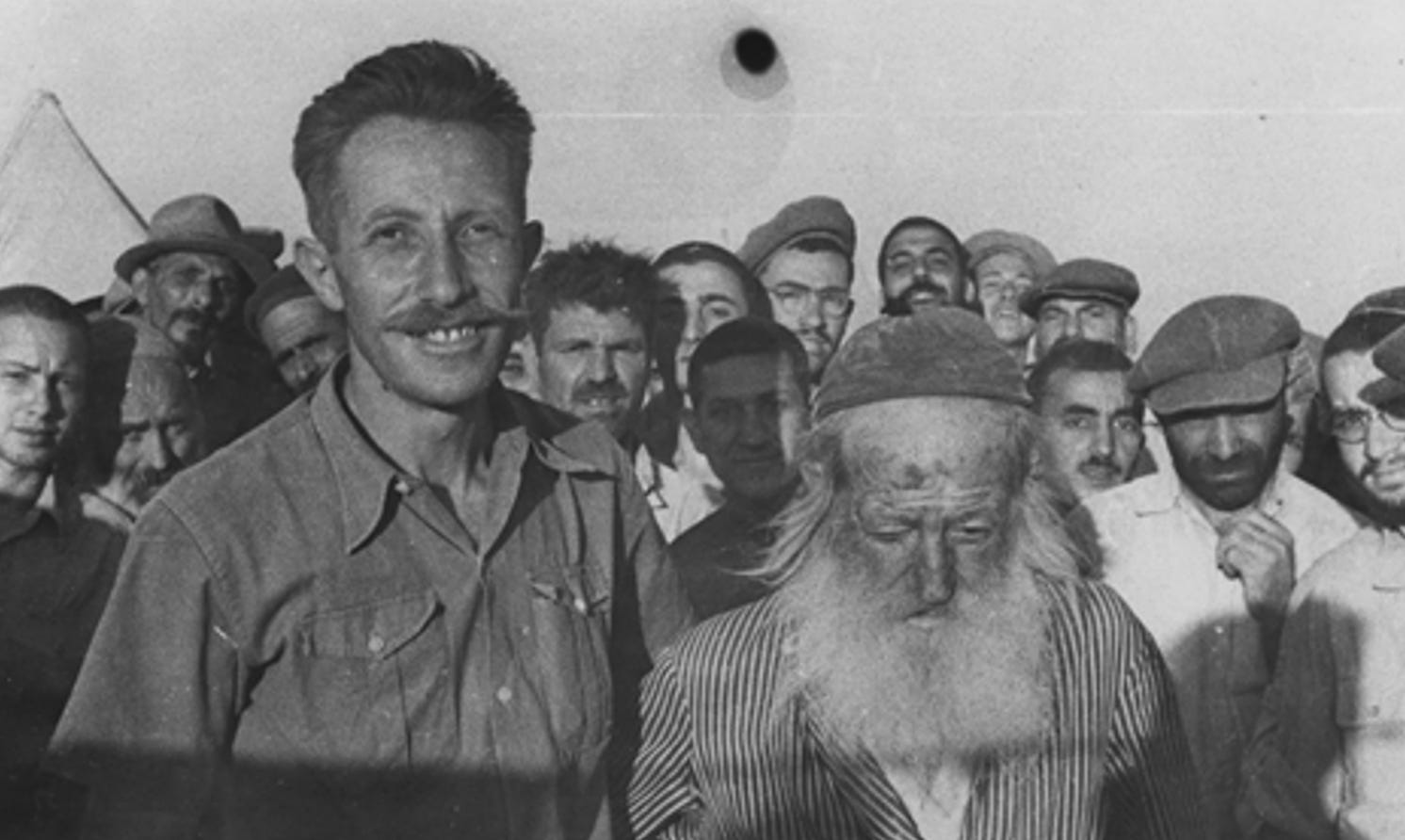
The Israeli commander of the prisoners, Yosef Blustein, and 92-year-old Rabbi Moshe Yitzchak Danziger of Jerusalem’s Old City. (ICRC)
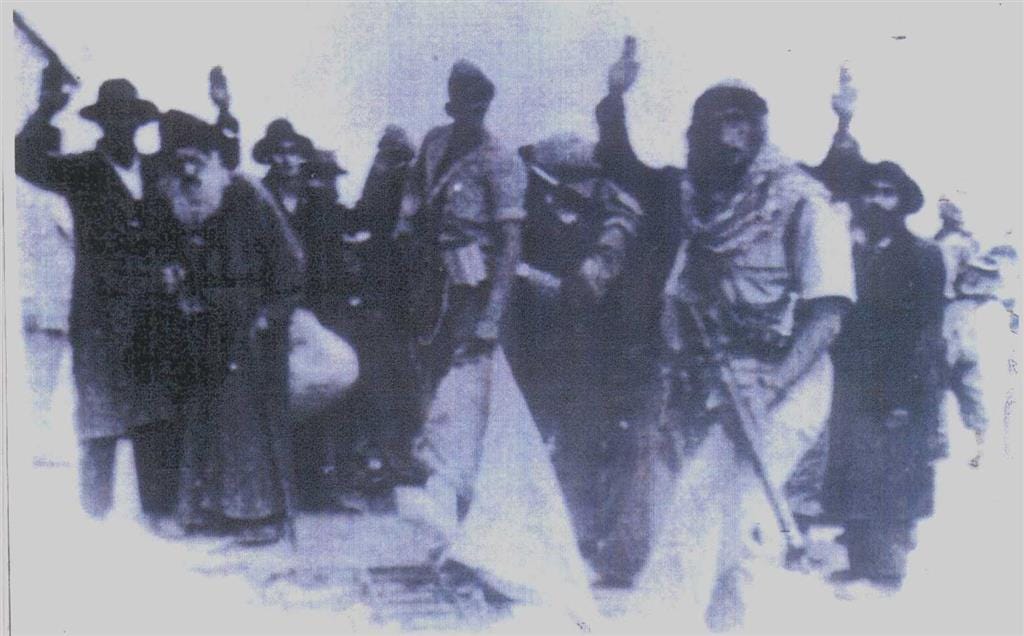
The elderly Rabbi Danziger, a resident of Jerusalem’s Jewish Quarter, is escorted into captivity by armed soldiers of the Transjordan Arab Legion following the Quarter’s surrender on May 28, 1948. (Photographer unknown). Rabbi Danziger was among the 23 elderly, wounded, and young prisoners released on November 30, 1948.
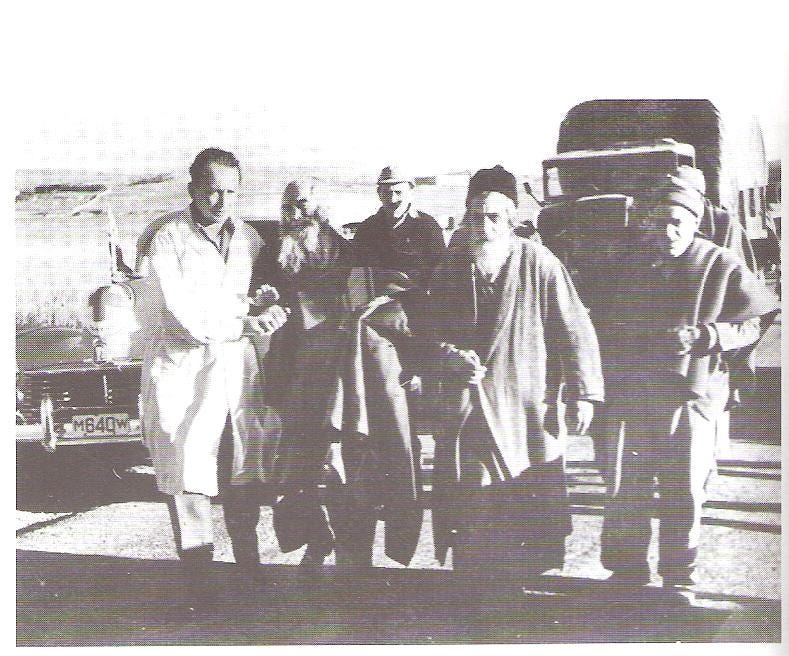
Was this a photo of Rabbi Danziger’s release? (Photographer unknown)
General Prisoner Population
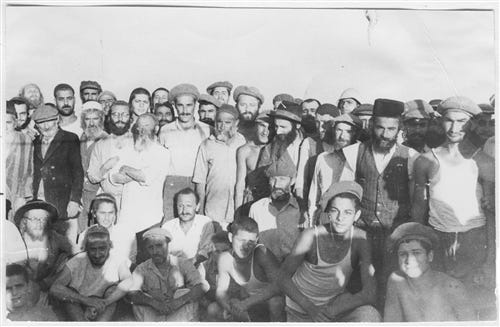
The pictures below ostensibly show the prison camp's “general population.” (Some men show up in more than one picture.) Appearing in photographs was vital for POWs to show “proof of life,” especially for their families in Israel. (International Committee of the Red Cross)
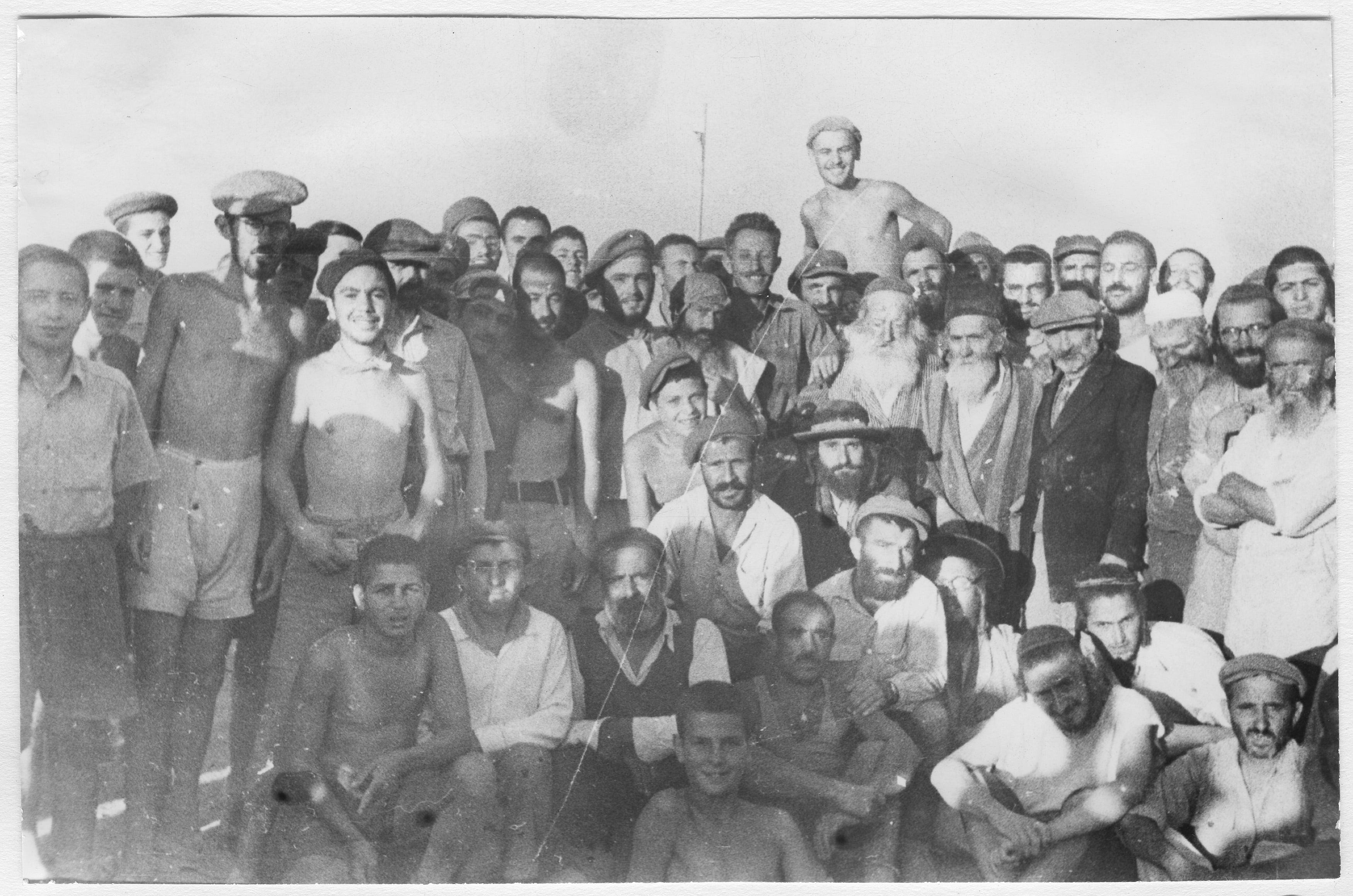
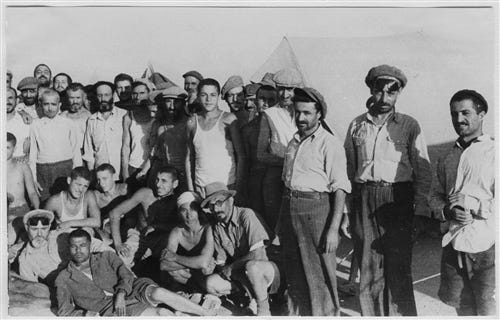
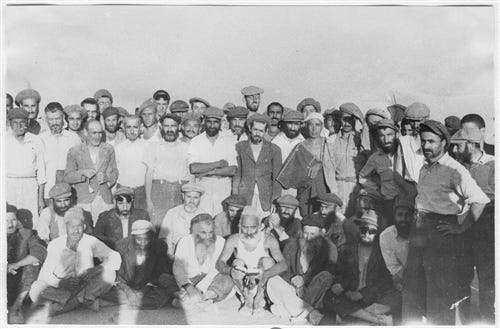
One photograph presents a mystery: approximately 35 men are wearing “kasketim,” or flat workers’ caps. Most appear older and bearded. The caps may have been common among non-Haredi men of the Old City or among the 30 workers taken from the hydroelectric plant at Nahariyim. At present, neither explanation can be confirmed.
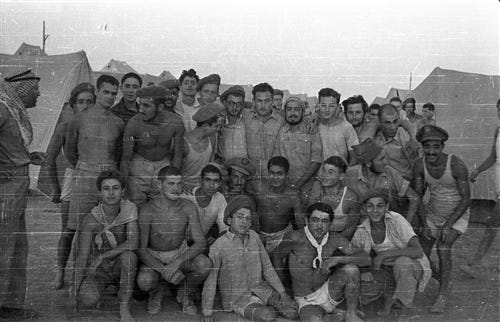
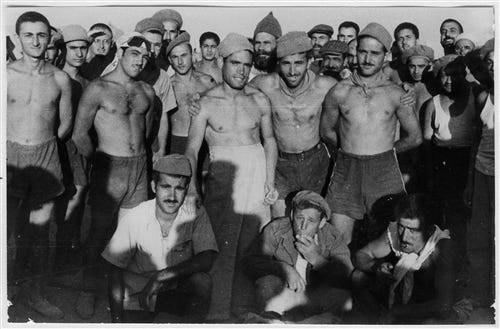
The pictures below apparently show the “combatants” of the prison camp — judging by their age, physique, and headgear. (International Committee of the Red Cross)
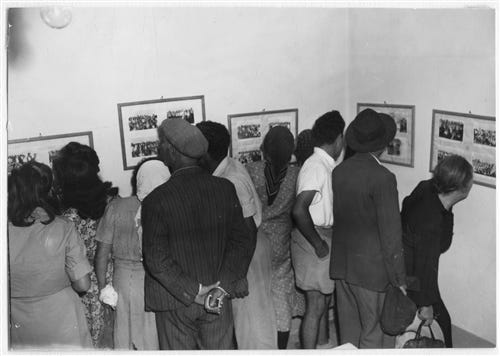
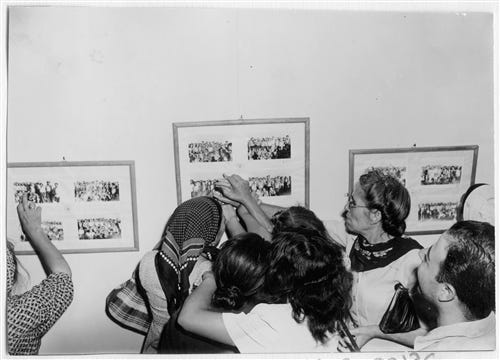
The following photographs show families searching for their sons, husbands, and fathers in displays mounted in Jerusalem, Tel Aviv, and Haifa. For relatives who had received little or no news, these photographs offered proof that the prisoners were alive.
Religious Life
The prisoners’ religious observance ranged from secular to fervently observant, and camp leadership had to accommodate all. They established a daily routine that included multiple prayer services, Talmud study groups, and religious lectures. They set up three makeshift synagogues. For several months, the prisoners had too few prayer books, chumashim, and pairs of tefillin. Many prayed from memory or read prayers Rabbi Baruch Haim Amadi wrote in notebooks. Religious books eventually arrived from Israel via the Red Cross.
Prisoners from Massuot Yitzhak and Ein Tzurim carried Torah scrolls with them into captivity.
The Red Cross delivered matzah for Passover.
Among the prisoners taken after the battle for the Jewish Quarter was Rabbi She’ar Yashuv Cohen, later chief rabbi of Haifa. Cohen, a member of the Irgun, was severely wounded before his capture. In his memoirs, he described how Rosh Hashanah and Yom Kippur were observed under the close watch of astonished captors:
“The camp was composed of three minyanim [prayer quorums]. The first minyan comprised the survivors of the Gush, joined by all who had been active combatants. The second minyan consisted of the various Hasidic “sects” from the Old City of Jerusalem — Bratzlaver and Karliner Hasidim — together with the Perushim. The third minyan was composed of Sephardim, including those from Kurdistan, who followed their own Sephardi tradition. We emptied two of the tents in the field hospital for this purpose. The Torah scrolls salvaged from the flames of Gush Etzion and the Old City were also placed there and read on jerry cans covered in talleisim.” —Mishpacha Magazine.

Jordanian Legionnaires with an Ashkenazi-style Torah, believed to be from Massuot Yitzhak or Ein Tzurim. The photograph may have been taken in Hebron on the way to the Umm al-Jamal camp. (Photographer unknown)
Food, Clothing, and Supplies
The prisoners suffered from hunger during their first weeks in the camp. Their meager rations consisted of thin soup, bread/biscuits, unsweetened tea, a small portion of cheese, and sometimes non-kosher meat. Red Cross deliveries from Israel were slow and infrequent. The prisoners eventually arranged to buy pita bread and vegetables from a local merchant. They established kosher and non-kosher kitchens.
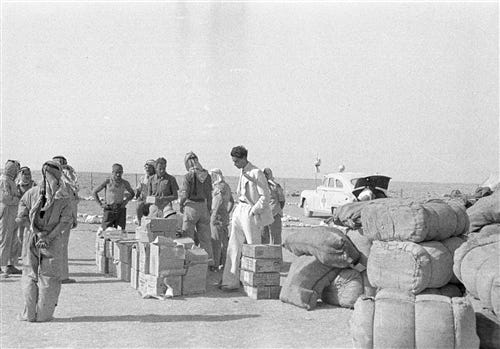
The Red Cross delivered supplies and warm clothing to the camp. (ICRC)
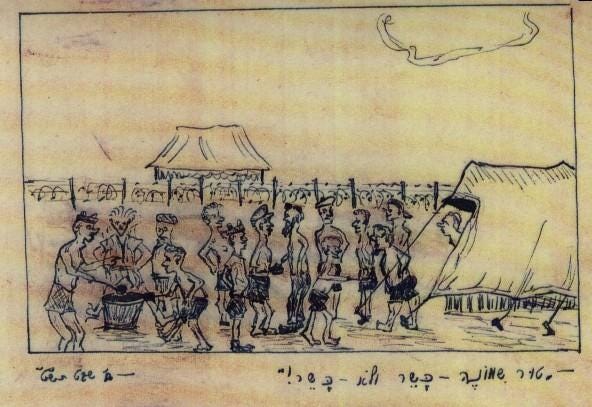
A POW’s drawing of the queues for kosher and non-kosher food at the Umm al-Jamal prisoner camp. (Kfar Etzyon Memorial and Heritage Site)
Each prisoner was given three blankets, which also served as bedding. The desert nights were bitterly cold, and the POWs were still there through the winter and snow. The Red Cross eventually delivered warm clothing, apparently donated by families in Israel.
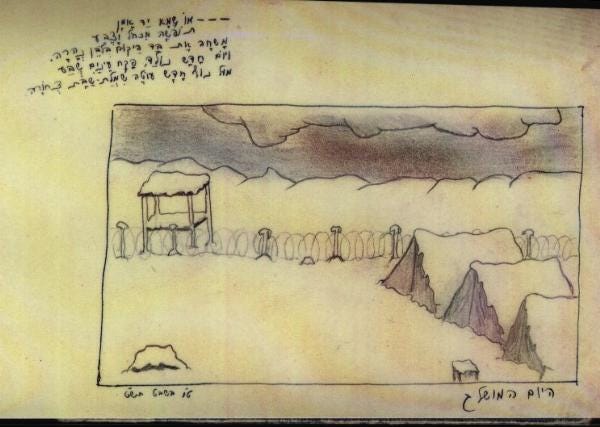
A POW’s drawing of snow in the Umm al-Jamal prisoner camp. (Kfar Etzyon Memorial and Heritage Site)
Postscript
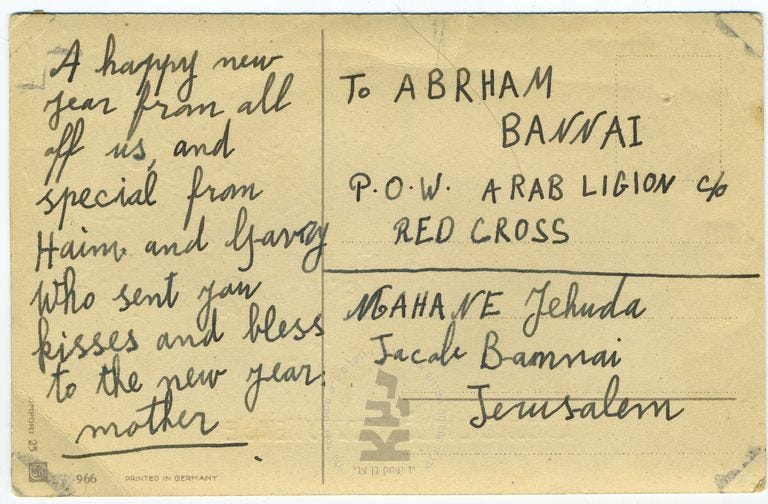
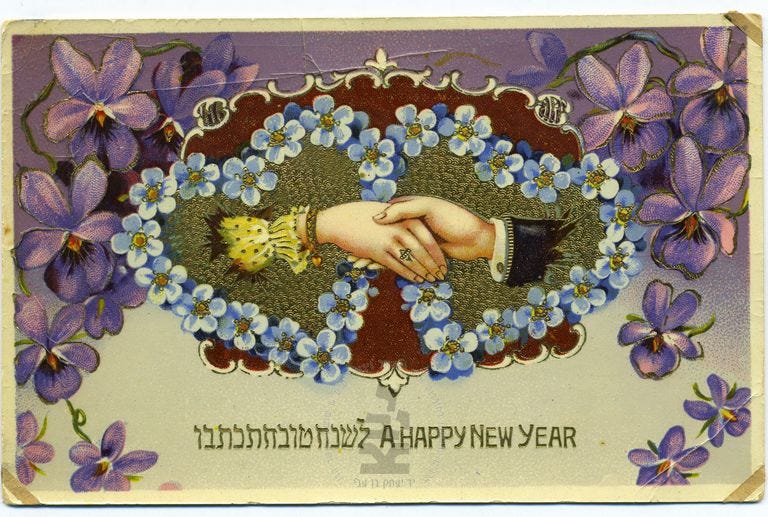
Only days before the Jewish New Year, I found this New Year card in the Yad Ben-Zvi archives. The Red Cross delivered mail between the prisoners and their families in Israel. Jordan's censor imposed two rules: messages had to be in English and could not exceed 25 words. Members of the well-known Jerusalem Bannai clan exchanged this postcard.
See Chapter 1 here:
Photographic Secrets from the Arab-Israeli Battlefield in 1948 and Israel's War of Independence

This article takes a thirty-year detour from the First World War photographs of Palestine that usually occupy my research. Yet the method is the same: begin with an image, verify its caption, identify the people in it, and follow the paper trail until an overlooked history emerges.