

Madam Lydia Mary Olive Mamreoff von Finkelstein Mountford (1855- 1917) is unknown today. But 125 years ago, she was famous worldwide and openly conveyed her love of Zion to many audiences. Performances, books, and lectures such as hers and Mark Twain’s stirred many American Christians who fantasized about the Holy Land.
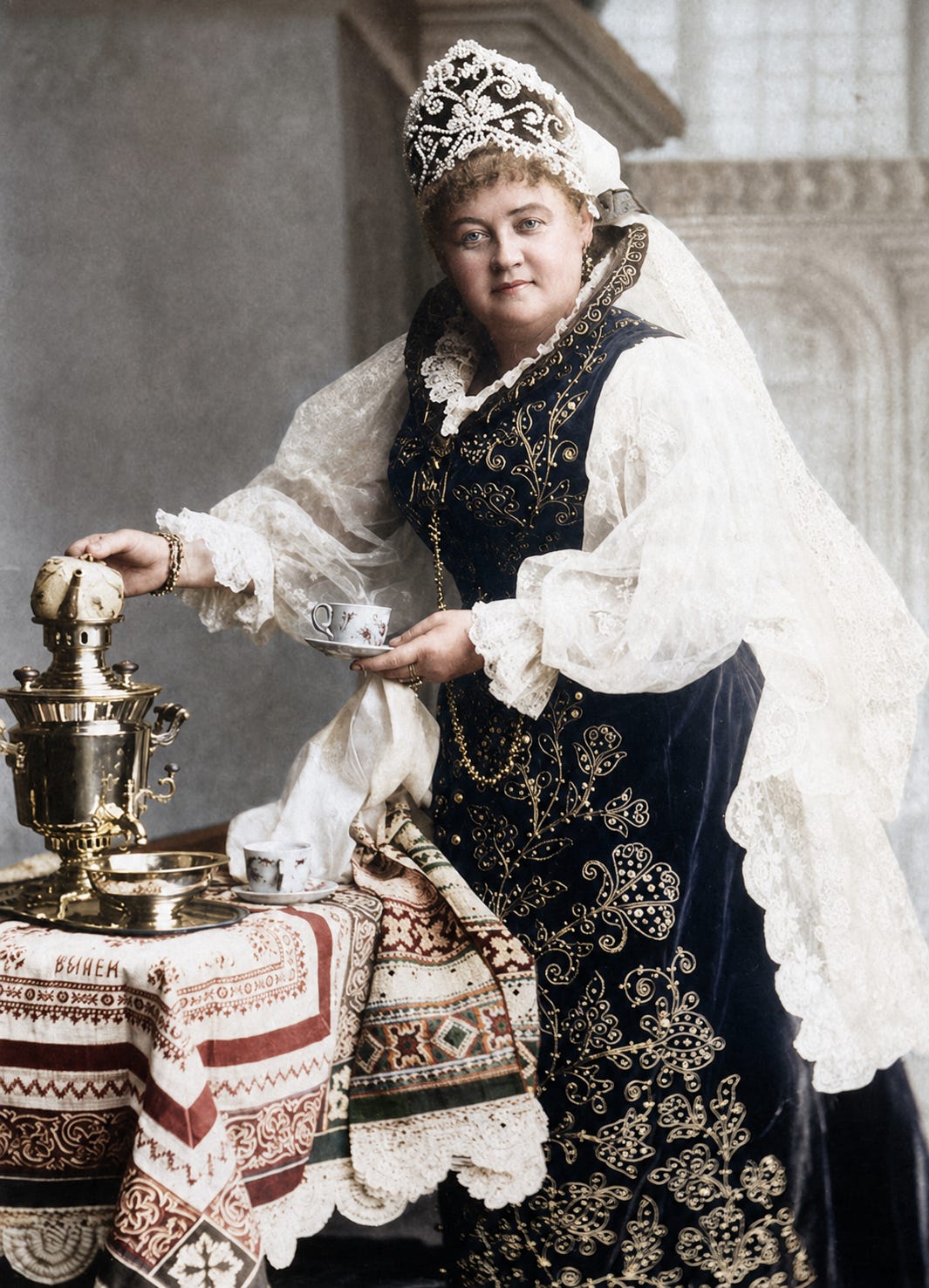
Lydia Von Finkelstein Mountford (Set in Stone, Fixed in Glass, AI-enhanced)
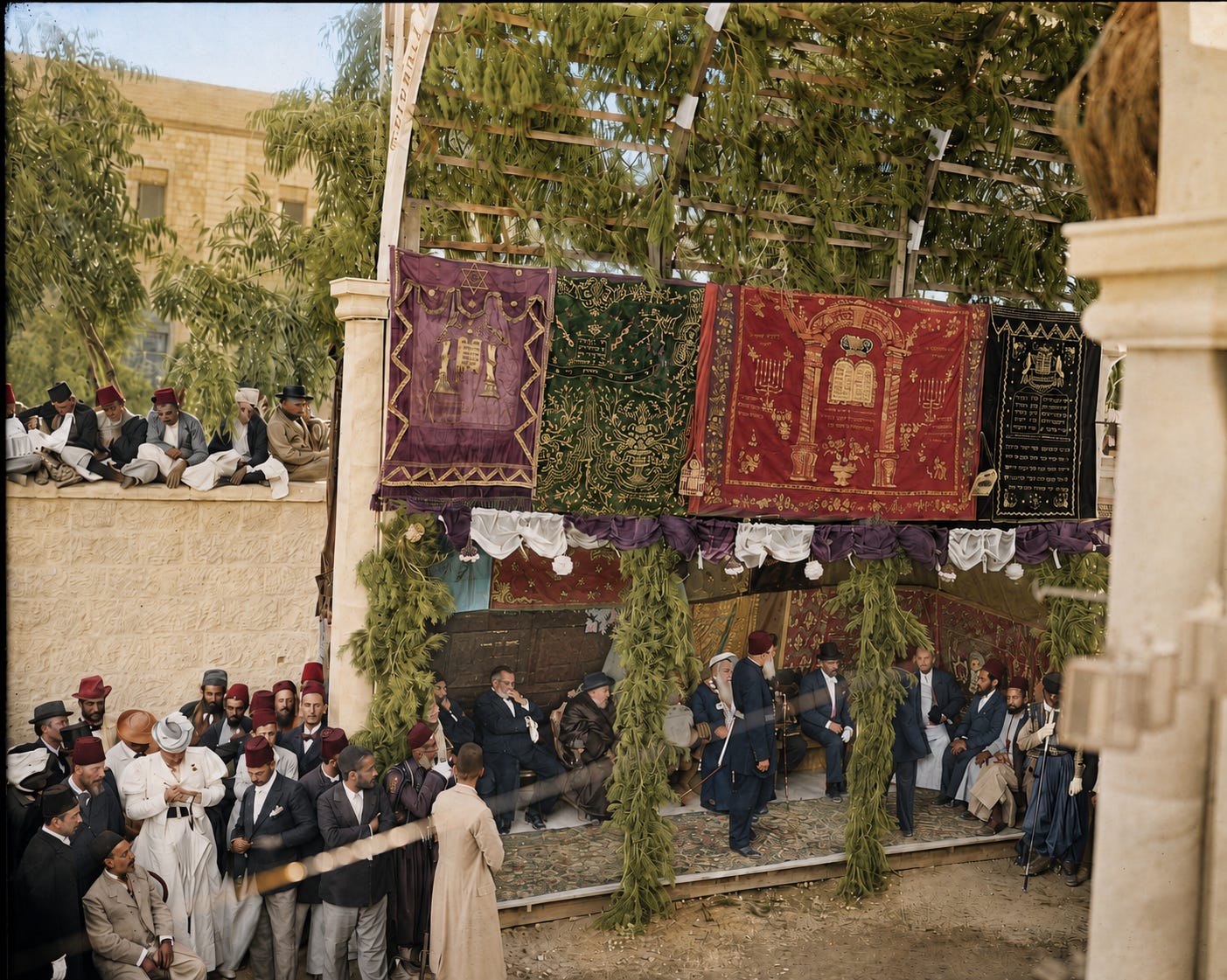
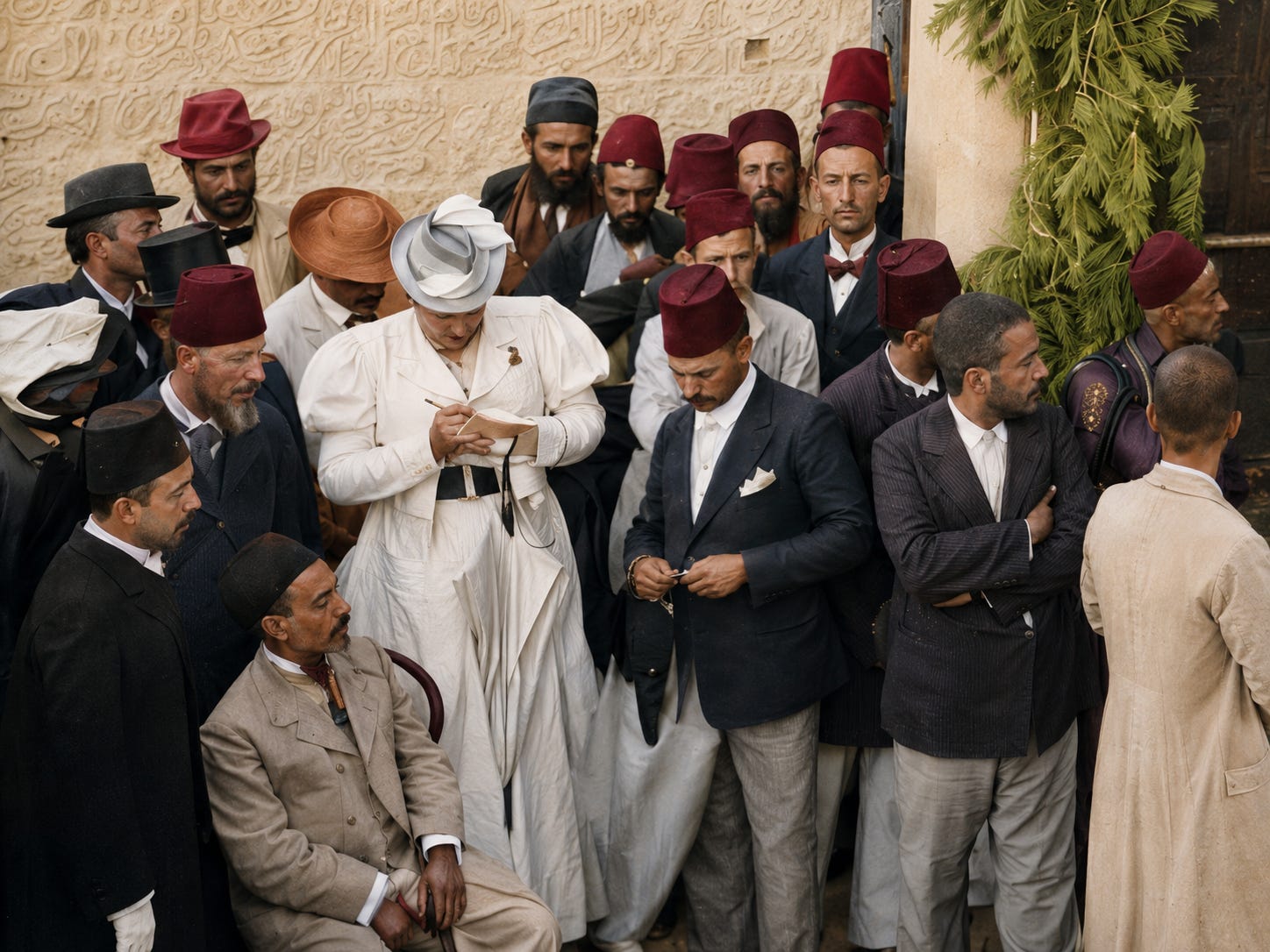
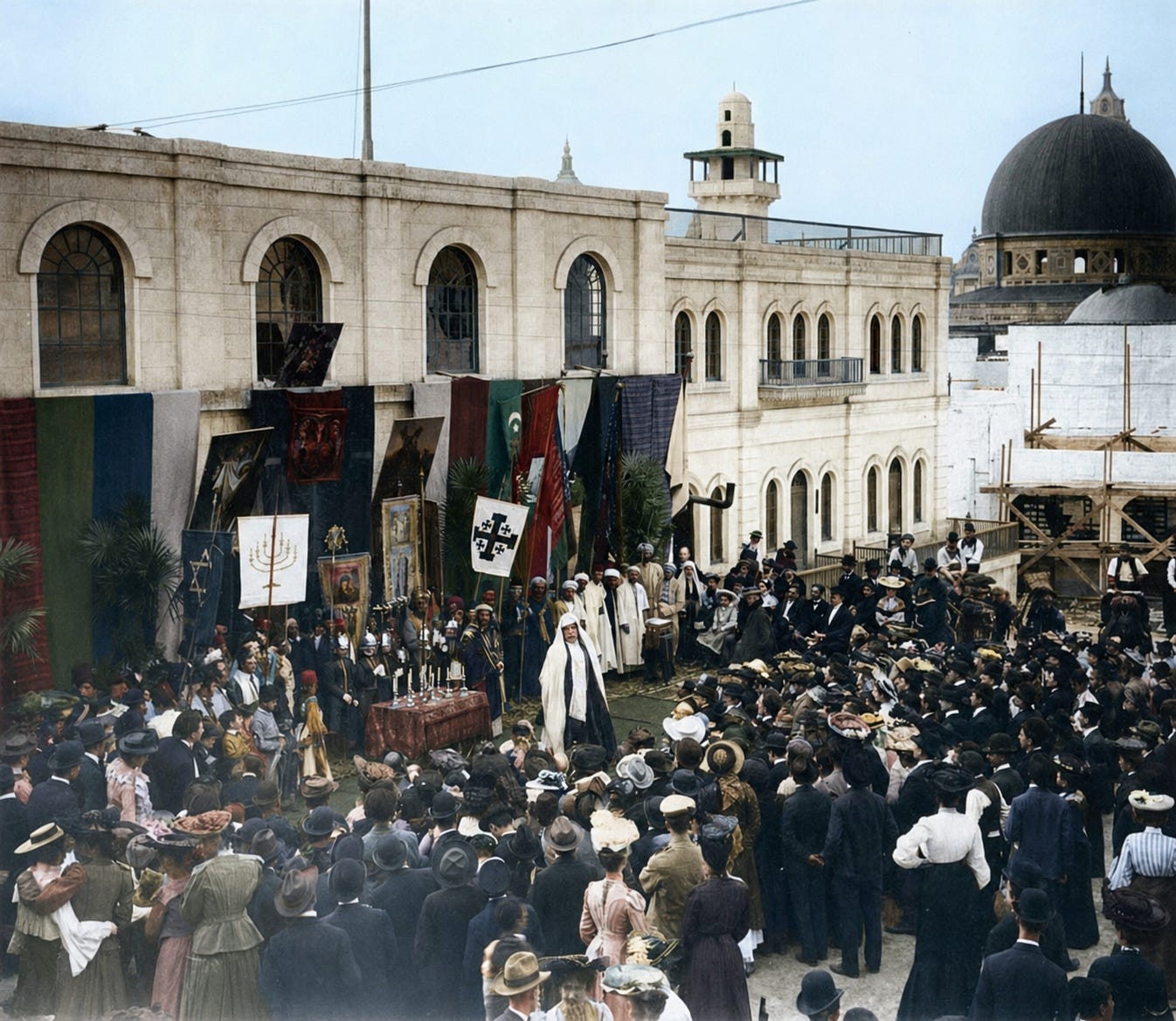
Lydia Von Finkelstein was born in Jerusalem in 1855 to a Russian family, apparently Jewish. She spoke Russian, Arabic, Hebrew, German, and French. The family converted to Christianity, and later in life, she became a Mormon. She was a popular actress, missionary, and news correspondent. She traveled to the United States, Great Britain, India, Australia, and New Zealand, presenting Bible-themed plays. She filed news reports on the German Emperor’s 1898 visit to Jerusalem and appears in the picture with a reporter’s pad in hand at the Jewish reception for the Emperor.
Lydia the Performer
Several clippings about Von Finkelstein’s Biblical performances in New Zealand in the 1880s appear in newspaper archives. One article in the Aroha News was written by Von Finkelstein herself and was entitled “PALESTINE FIFTY YEARS AGO AND PALESTINE TODAY.” Her observations about life in the Holy Land for Christians and Jews are fascinating and reveal the difficult living conditions of Jerusalem’s inhabitants. Excerpts are presented below.
About fifty years ago, with the exception of some Polish Jewish families, and a few Latin monks, there were no European residents in Jerusalem. At that period the Jews did not contribute either to the civilisation of the inhabitants or the improvement of the city, but adapted themselves to the manners of the people and the exigencies of the place. The monks confined themselves to their daily avocations in the convents, and to the entertainment of wealthy pilgrims and travellers, whose visits, like those of angels, were few and far between.
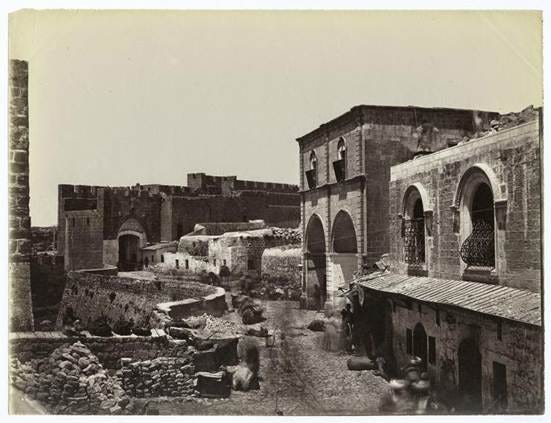
Inside the Jaffa Gate in Jerusalem’s Old City as it appeared in Lydia
Von Finkelstein’s day, circa 1870. (New York Public Library)
The Jews, as well as the native Christians, throughout Syria and Palestine, were daily and hourly subjected to oppression, extortions, exaction, robbery and insults from their Moslem neighbours. It was no unusual occurrence for the Moslem to enter their houses, ransack closets and boxes, and appropriate any article of wearing apparel, furniture, or food that took the marauder’s fancy. The local Government authorities would occasionally, when in need of funds, levy blackmail to the amount of hundreds of pounds on the Jews and native Christians, threatening them with massacre and plunder in default of payment. Consequently, Jews and native Christians dared to make any display of wealth only at the risk of losing life or property, and often both....
... With the advent of the American and English missionaries came the dawn of a brighter day for the Holy City, and indeed for the whole country. On account of Moslem fanaticism and prejudice, these messengers of the Gospel, and consequently pioneers of civilisation, were obliged for a certain period of time to adopt the Oriental dress for safety. The Oriental furniture, utensils, and cuisine, though in many respects better adapted to the climate and surroundings, were so entirely different to those of Europe and America, that those early settlers, wealthy or otherwise, may truly be said to have endured hardships and privations great and innumerable. Occidental furniture, utensils, crockery or glass, were not to be had for love or money; and only those fortunate families or individuals possessed them who had had sufficient foresight to bring such articles from their homes in Europe. Further, there was not a window in any house in Jerusalem that had a pane of glass in it; wooden lattices, shutters, and iron bars being the order of the day.
About the year 1845, a European merchant first imported —at great inconvenience, risk, and cost, having to travel to Beirout and Alexandria to make the purchase—Occidental furniture, crockery, and windowglass. There were no facilities for travel, and no steamers touched at the port of Jaffa. Once, and later twice a year, the Jewish, Latin, and other communities sent messengers to Beirout from Jerusalem, a journey of about 150 miles overland, to fetch the mails and other matter that might have been brought by the steamers from Alexandria and Constantinople, which at stated periods touched for a few hours at Beirout. About the year 1845 steamers began to stop occasionally at the port of Jaffa...
The Diva’s American Connection
Madame Lydia moved to the United States in 1877. When she returned to the Holy Land nine years later, she applied to the American consulate for citizenship but was denied, even though her mother and brother had once worked there. Nevertheless, she appeared prominently in the United States, including performances at the re-creation of Jerusalem at the World’s Fair in St. Louis, Mo., in 1904. At the opening of the exhibit, Madame Lydia (“elocutionist and fantasist of Biblical life”) declared, “You cannot go to Jerusalem, so Jerusalem comes to you. To American energy, all things are possible.”
Lydia Von Finkelstein was also a welcomed performer in the state of Utah, where she presented her Bible-based plays. She was particularly popular among Mormons. The president of the Church of Latter-day Saints, Wilford Woodruff, wrote, “I took my family to the theater to listen to another lecture of Mrs. Lydia Mumford (sic) on Jerusalem. Her lectures are the most interesting of any I attended on the Holy Land.” According to several accounts, the actress-preacher was baptized, converted by the Mormon Church, and became very close to Woodruff. According to several accounts, she was married at the time to a British civil servant in India.
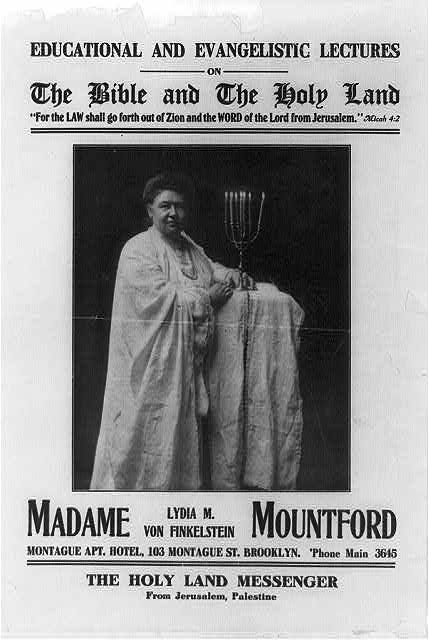
When Von Finkelstein appeared in New Zealand, the local Herald, dated October 19, 1888, wrote that her lecture, “The Jews at Home,” would give “a full description” of the life of Jews then living in Jerusalem, most of them pilgrims from across the world who came to die in the Holy City.
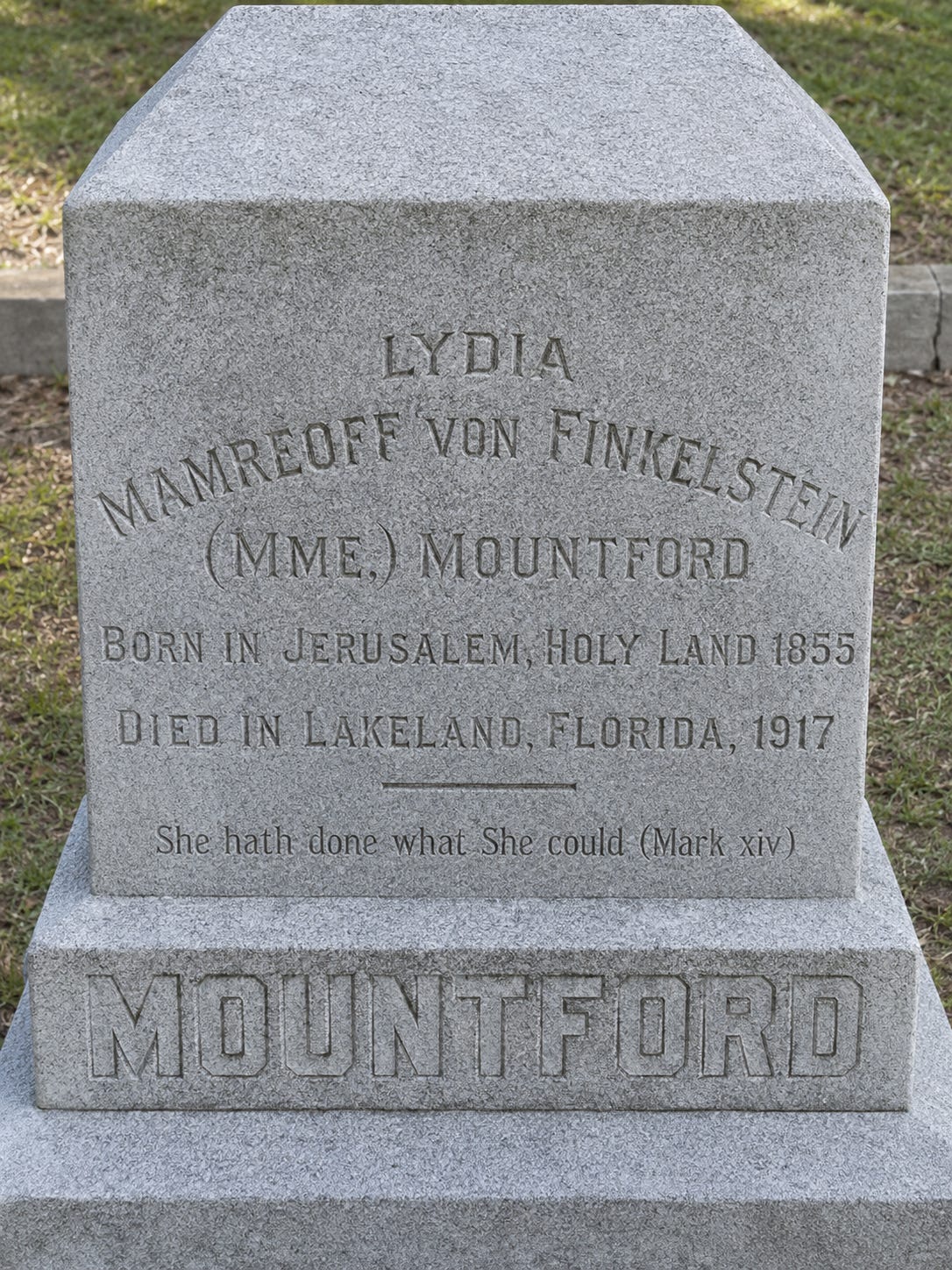
In one of her last letters, Von Finkelstein expressed satisfaction that the British forces had attacked Ottoman forces in Gaza; she had prayed they would occupy all of Palestine. “For a long time,” she wrote, “I have not cared to ever go again to Jerusalem, but now that the English will not, I know, try to make a mongrel, godless city of it, as all others would have done, I would like to see it again.” But she died a short time later, in March 1917, in Lakeland, Florida, at the age of 69.